
The exhibition at the Be’er Sheva ANZAC Memorial Centre was created with the intention of presenting the Battle of Be’er Sheva not only as a military event, but also as a human, historical and local story.
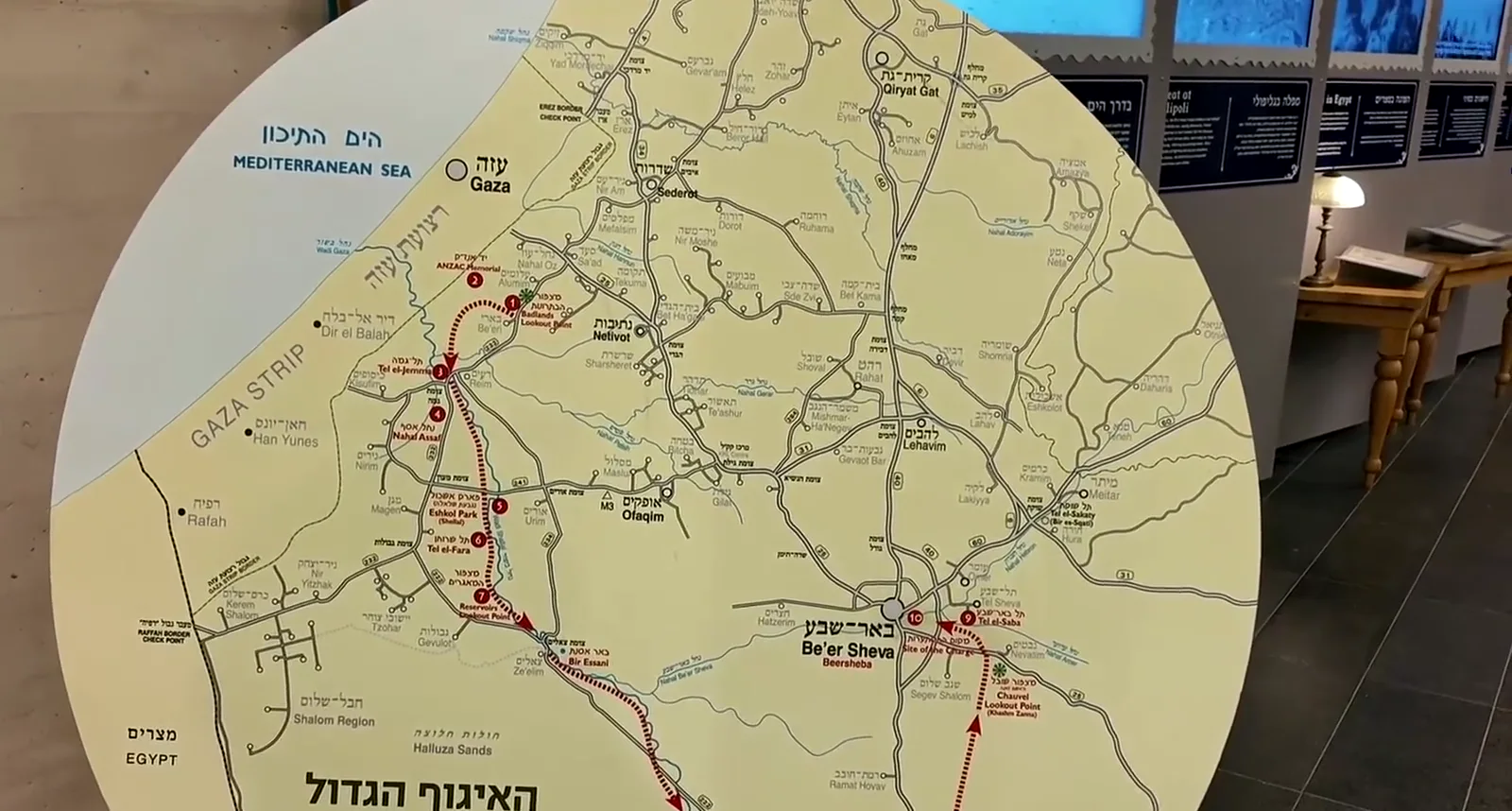
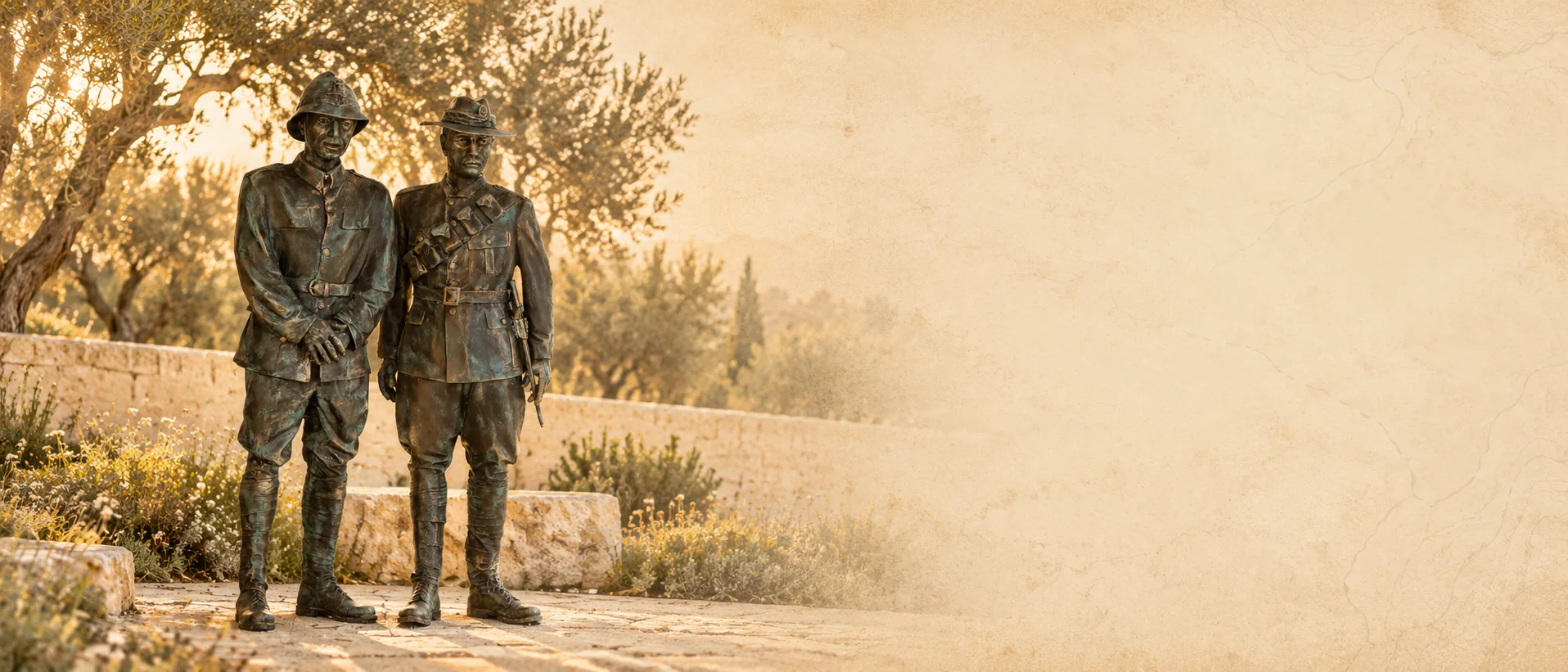
The curatorial approach connects the broader context of the First World War campaign with the personal stories of those who took part in it. Alongside military operations, maps and historical documentation, the exhibition gives space to letters, photographs, testimonies and personal stories, allowing visitors to encounter the soldiers behind the historical events.
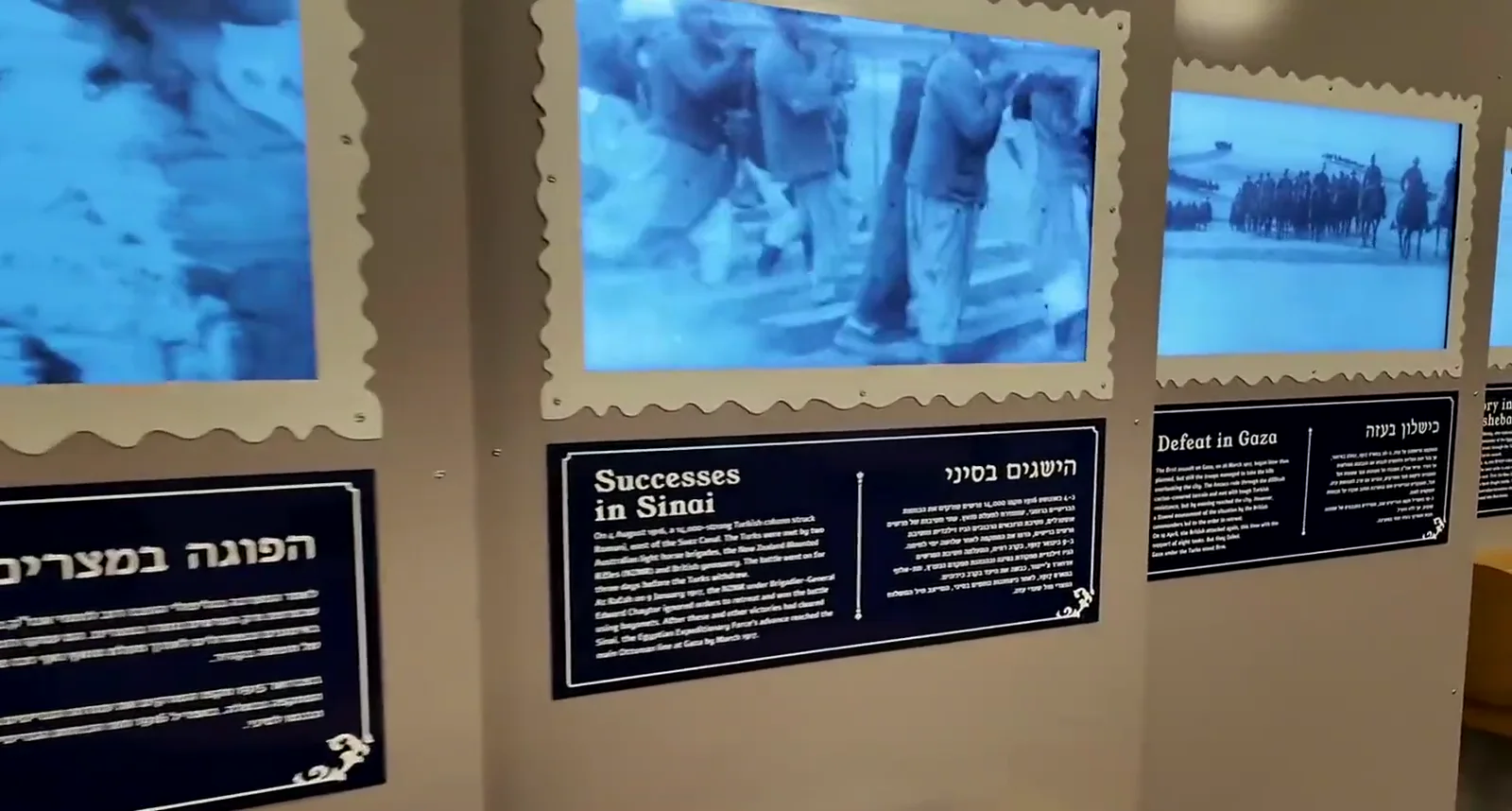
-
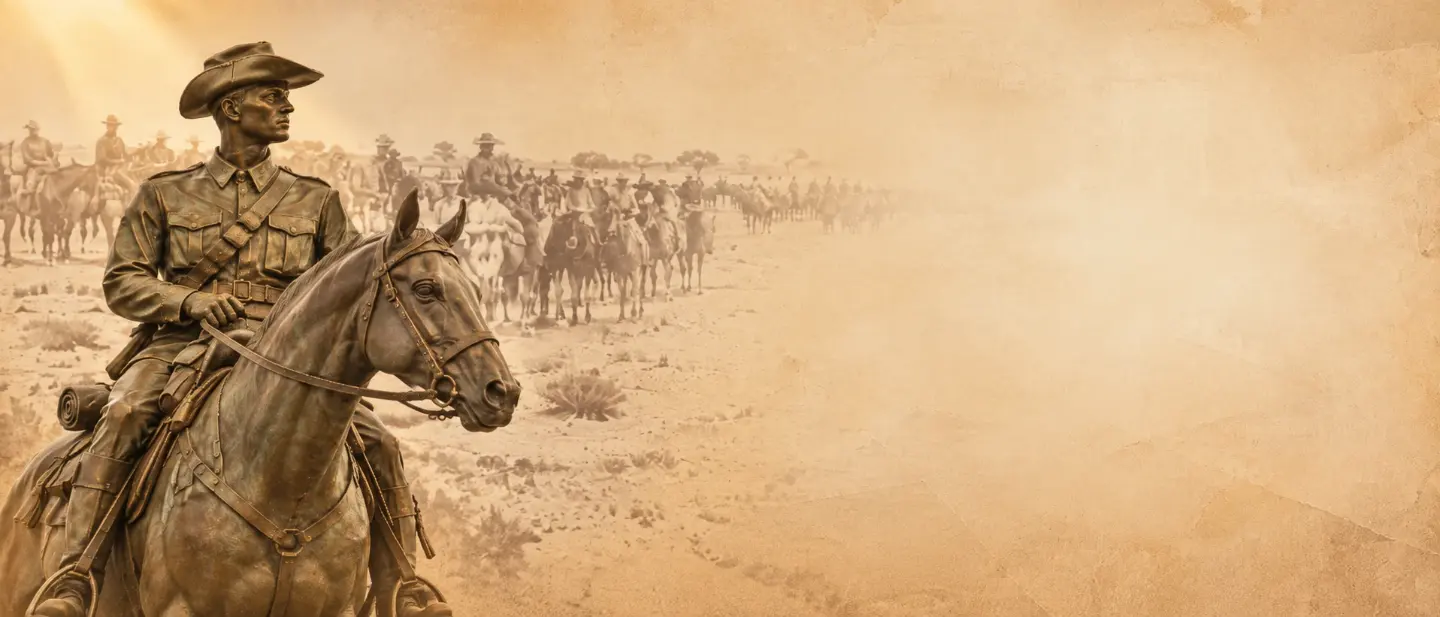
The exhibition is structured as a gradual journey. Visitors are first introduced to the historical background and the circumstances in which the forces operated in the region, followed by the strategic importance of Be’er Sheva and the events that led to the battle on 31 October 1917.
-
As the visit progresses, the emphasis shifts from the broader military narrative to the individual and human experience. In this way, the battle is transformed from a distant historical event into a story shaped by people, decisions, terrain and memories.
-
The Centre’s interpretive media combine museum displays, archival materials and audiovisual content. The integration of information, images, sound and objects allows the story to be presented in a clear and accessible manner to a wide range of audiences, while retaining its historical depth.
-
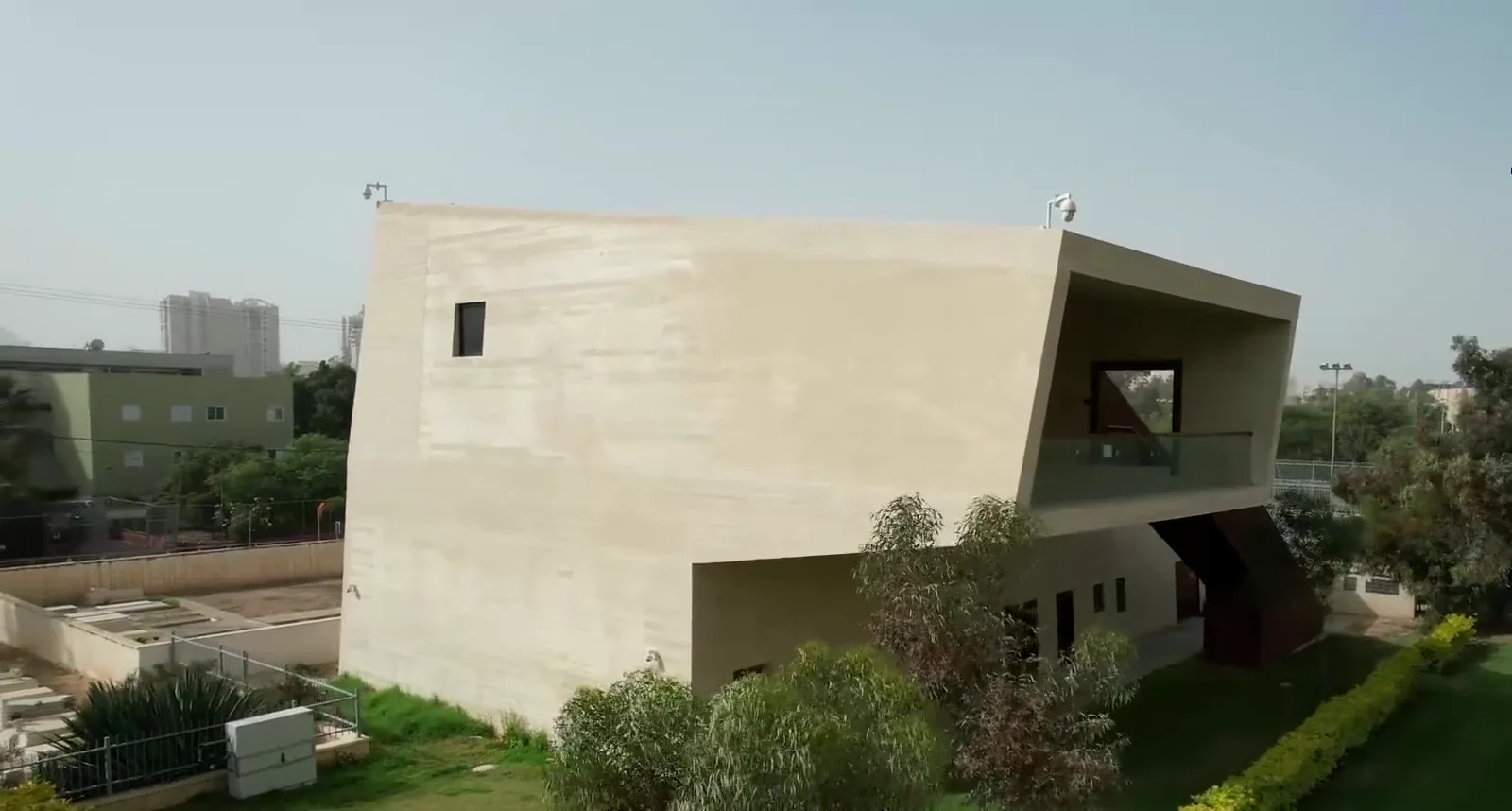
A central element of the Centre’s conceptual approach is the relationship between the exhibition and the site itself. The proximity of the Beersheba War Cemetery, and the view towards it during the visit, create a direct connection between the historical story, remembrance and commemoration.
-
The result is an experience in which history, place and the human story are brought together, enabling visitors to understand the Battle of Be’er Sheva as part of a broader story of war, memory and heritage.